

Effective communication is important for every successful workplace. Without it, miscommunications happen, leading to missed opportunities, deadlines and unclear expectations. When people understand what is required of them and that they are respected within an organisation, it improves employee engagement and wellbeing.
Why is Communication Important in the Workplace?
Strong communication connects teams to their purpose and one another. It enables clarity around goals, fosters trust, and drives results. When an organisation has poor communication, it leads to hostile work environments and reduced employee morale. This is why it is so important to create a culture where effective communication skills are an integral part of it.
When done well, communication:
-
Aligns people, goals and expectations:
When organisations have effective communication channels and good communication in the workplace, it ensures that people are aligned across all areas, goals, and know exactly what is expected of them.
-
Reduces misunderstandings and builds stronger relationships:
Poor communication can lead to misunderstandings, which further break down relationships, build resentment and hurt company culture. By having effective communication tools and strategies in place, organisations reduce misunderstanding and create a positive work environment.
-
Improves morale and engagement:
Employees who feel heard and valued are known to report higher morale and engagement across the organisation. This can be achieved through encouraging leadership and management to have active listening, receptive body language and productive communication styles that welcome open conversations with employees.
-
Boosts productivity, innovation, and customer outcomes:
When communication channels across an organisation are streamlined and clear, it leads to increased productivity and innovation. This helps to boost customer satisfaction and outcomes, leading to a more successful business.

Common Communication Challenges in the Workplace
Communication breakdown and miscommunications are one of the leading reasons behind poor productivity and misaligned goals.
Some of the most common communication challenges include:
- Remote or hybrid teams with fewer in-person interactions can lead to poor communication and missed information across teams.
- Cultural and generational differences in communication preferences can cause company culture and effective communication to break down.
- Unclear roles and responsibilities lead to confusion and missing deadlines. Employees and leadership must understand their expectations of them from the beginning.
- Poorly delivered feedback creates tension or disengagement. It is always important that managers have active listening and communicate with their employees productively and respectfully.
- Tech overload or underutilised communication tools can lead to communication breakdown. Having too many platforms to communicate across also leads to communication breakdowns.
Communication Styles in the Workplace
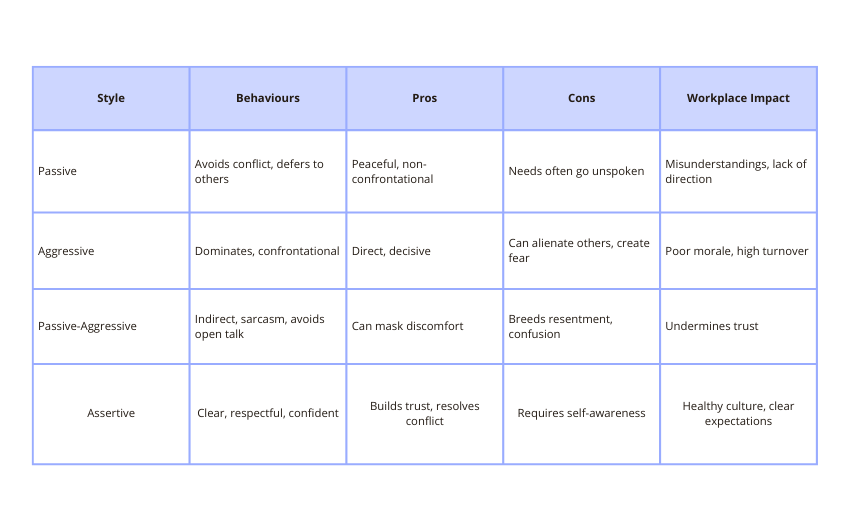
Methods of Communication In the Workplace
There are many different communication styles and methods of communication in the workplace. Each method of communication serves a different purpose and can help create effective communication and active listening.
The key is to match the method to the message:
- Verbal: Team meetings, 1:1s, presentations, phone calls
- Written: Emails, internal platforms like Slack or Teams, documentation
- Non-Verbal: Body language, tone of voice, eye contact
- Visual: Dashboards, reports, infographics, charts
- Digital: Video conferencing, shared cloud docs, project management tools
Tip:
Delivering complex feedback? Opt for verbal or face-to-face conversations over email and then follow up with an email communication recapping what was discussed.

7 Ways to Improve Communication Styles in the Workplace
- Encourage open dialogue and psychological safety — people speak up when they feel safe, so it is important to focus on creating a positive environment.
- Establish regular feedback loops — both formal and informal to ensure that employees are being communicated with effectively.
- Provide communication training, especially for leaders and new managers. This can be done through employee coaching or leadership training workshops.
- Clarify expectations upfront — set roles, goals, and success metrics early. This helps people know exactly what is expected of them.
- Tailor communication to personalities — some prefer directness, others value context. It is important to integrate how employees like to be communicated with, as it directly impacts how an employee feels.
- Use the right tools — streamline channels to avoid message fatigue. It is also important not to have too many tools or channels for communication, as things can get lost.
- Lead with empathy and active listening — create space for genuine connection. This will help create a positive company culture.

The Role of Leaders in Driving Effective Communication
Communication styles in the workplace start at the top. Leaders set the tone and communication method, and when they get it right, the ripple effect is powerful.
- Active listening builds trust and engagement. Leadership should always foster an environment where active listening is a staple of their communication style.
- Clear direction aligns teams around goals. Without clear direction and communication, team members can become lost and directionless. It is important in the workplace that everyone understands what the workplace goals and strategies are.
- Empathy fosters inclusion and reduces conflict. Always encourage managers to act with empathy and ensure their team members feel comfortable coming to them with a problem.
- Leadership training ensures communication is consistent and intentional. At E.L Blue, we support leaders through tailored workshops that strengthen communication habits and cultural alignment.

E.L Blue’s Approach to Communication Consulting
At E.L Blue, we help businesses uncover the root causes of communication breakdowns — and fix them for good.
Our consulting approach includes:
- In-depth communication audits and cultural diagnostics
- Tailored training programs for teams and leaders
- Conflict resolution strategies that rebuild trust
- Leadership coaching to embed lasting change

Conclusion
A high-performing workplace is built on trust, clarity, and connection — all of which stem from strong communication and streamlined communication channels.
Whether you’re managing rapid growth, leading remote teams, or navigating cultural change, communication is your foundation. With the right tools and expert guidance, it’s also your greatest lever for impact.
As a leading outsourced HR company in Australia, we provide expert guidance in tailoring leadership training programs and employee coaching services to improve communication channels across organisations.
Better communication starts with intention. Let E.L Blue help you lead the change.