
Most workplace disputes about performance come down to one question: can the employer show what happened?
Performance documentation is how that question gets answered. Without it, even a fair and reasonable decision can be difficult to defend.
Why Performance Documentation Carries Weight in a Workplace Dispute
Performance documentation is usually created for day-to-day management, not for a dispute. It becomes critical when an employee challenges a performance-related decision, such as:
- A performance rating they believe is unfair
- Being placed on an improvement plan
- A formal warning for poor performance
- Dismissal on performance grounds
- A complaint that the way their performance was managed amounted to bullying
In each case, the employer’s version of events is tested against its performance documentation. The records show that the concerns were genuine, that they were raised with the employee, and that the employee had a fair opportunity to improve.
Where performance documentation is clear and complete, a workplace dispute is often resolved early. Where it is missing, the dispute tends to become one person’s word against another’s.
The Risk of Relying on Verbal Performance Discussions
Many performance conversations happen verbally, and that is normal. The risk arises when a verbal discussion is the only evidence of a performance concern.
Recollections differ. A manager may remember giving a clear warning, while the employee recalls a general conversation about workload. Without performance documentation, there is no way to settle which account is correct.
Key details go unrecorded. A verbal discussion rarely captures the expected standard, the timeframe for improvement or the consequences if performance did not improve. These are the details a workplace dispute is most likely to focus on.
People move on. If the manager who held the conversation has since left the business, the only account of the discussion may leave with them.
Performance Documentation That Supports an Employer’s Position
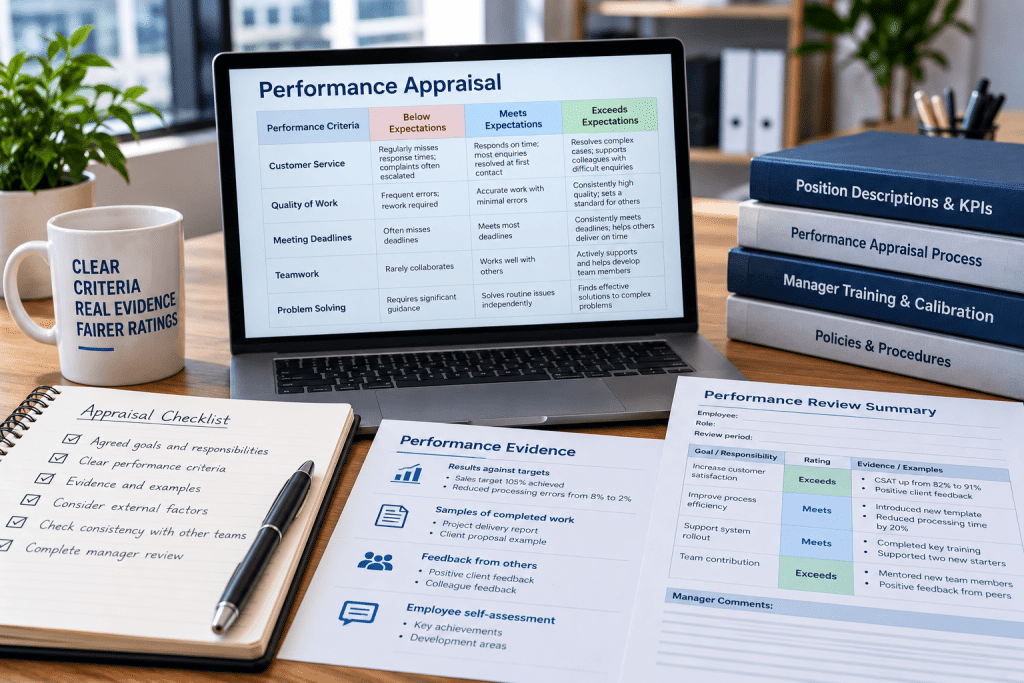
In a workplace dispute, a performance history is rarely built from one document. It usually draws on several types of performance documentation:
- Position descriptions and KPIs, showing what the employee was expected to deliver
- Performance appraisal records, including ratings, manager comments and the employee’s own feedback
- Meeting notes and follow-up emails, confirming what was discussed and agreed in performance conversations
- Performance results, such as targets, error rates, quality checks or customer feedback
- Training records, showing the support provided to help the employee improve
- Warning letters and improvement plans, where formal steps were taken
Together, these documents show a clear sequence: what was expected, where performance fell short, what was communicated and what support was offered. That sequence is what makes performance documentation persuasive when a decision is challenged.
Documentation Gaps That Can Weaken an Employer’s Position
Performance documentation only helps an employer when it is consistent. Gaps and contradictions can weaken a position that would otherwise be sound.
Appraisals that do not reflect the concerns. If an employee received a positive performance appraisal shortly before being managed for poor performance, the documentation appears to contradict itself.
Concerns with no earlier record. When the first written record of a performance issue is a formal warning, it can suggest the concern was never raised before formal action began.
Expectations that were never documented. If the standard the employee was measured against cannot be found in their position description, KPIs or any written communication, it is hard to show they knew what was required.
Long gaps in the performance history. Records that stop for months and then resume just before a decision can make the process appear rushed or reactive.
Keeping Performance Documentation Dispute Ready
Performance documentation is most useful when it is kept up to date as part of normal management, rather than pulled together once a workplace dispute begins.
Document as issues arise. Each performance concern should have a written record from the point it is first raised, not only once it becomes serious.
Keep appraisals aligned with ongoing feedback. The outcome of a formal performance review should be consistent with the concerns and feedback recorded during the year.
Check the records before formal action. Before a warning or improvement plan, review the existing performance documentation to confirm it supports the step being taken.
Apply the same standard across managers. Clear workplace policies and procedures help ensure every manager documents performance in the same way.
Final Thoughts
Performance documentation turns a manager’s view of performance into evidence an employer can rely on. Keeping it clear and consistent as part of everyday performance management is the most effective way to reduce risk if a workplace dispute arises.